
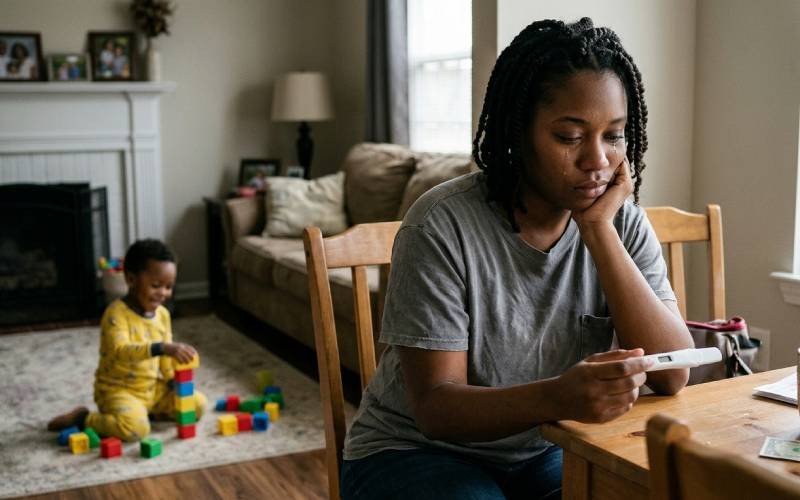
Many couples start their parenthood journey with joy, but for some, the path changes after the first child. Secondary infertility, the inability to conceive again after a previous birth, is often misunderstood. Unlike primary infertility, it faces the assumption that a second child should come easily, leading to feelings of isolation and guilt. According to Dr. Maxwell Banda, secondary infertility differs from primary infertility, which is defined as the inability to conceive after 12 months of trying without any prior successful pregnancy. Secondary infertility affects couples who have conceived before but now struggle to do so again. The realization can be subtle, with months or a year passing without a positive pregnancy test. Pressure can be intense, particularly in cultures that celebrate large families. Medical experts point to several factors. Age is a major contributor, with fertility declining after 35. Health issues like hormonal imbalances, uterine abnormalities, or complications from a previous pregnancy can also impact fertility. Conditions like endometriosis or polycystic ovary syndrome can interfere with conception. Dr. Banda explains that age and egg quality are major factors, as women are born with a limited number of eggs. Structural issues, such as scarring or blockages in the uterus or fallopian tubes, can also hinder fertility. Lifestyle factors, including stress, weight changes, poor diet, smoking, and alcohol consumption, can also impact reproductive health
The Silent Struggle: Secondary Infertility and the Emotional Toll of Trying Again
Discover the complex emotional journey of secondary infertility, its causes, and the support available for couples struggling to conceive a second child.
4
visualizações
0
curtidas
0
comentários






0 Comentários
Entre para comentar
Use sua conta Google para participar da discussão.
Política de Privacidade
Carregando comentários...
Escolha seus interesses
Receba notificações personalizadas