
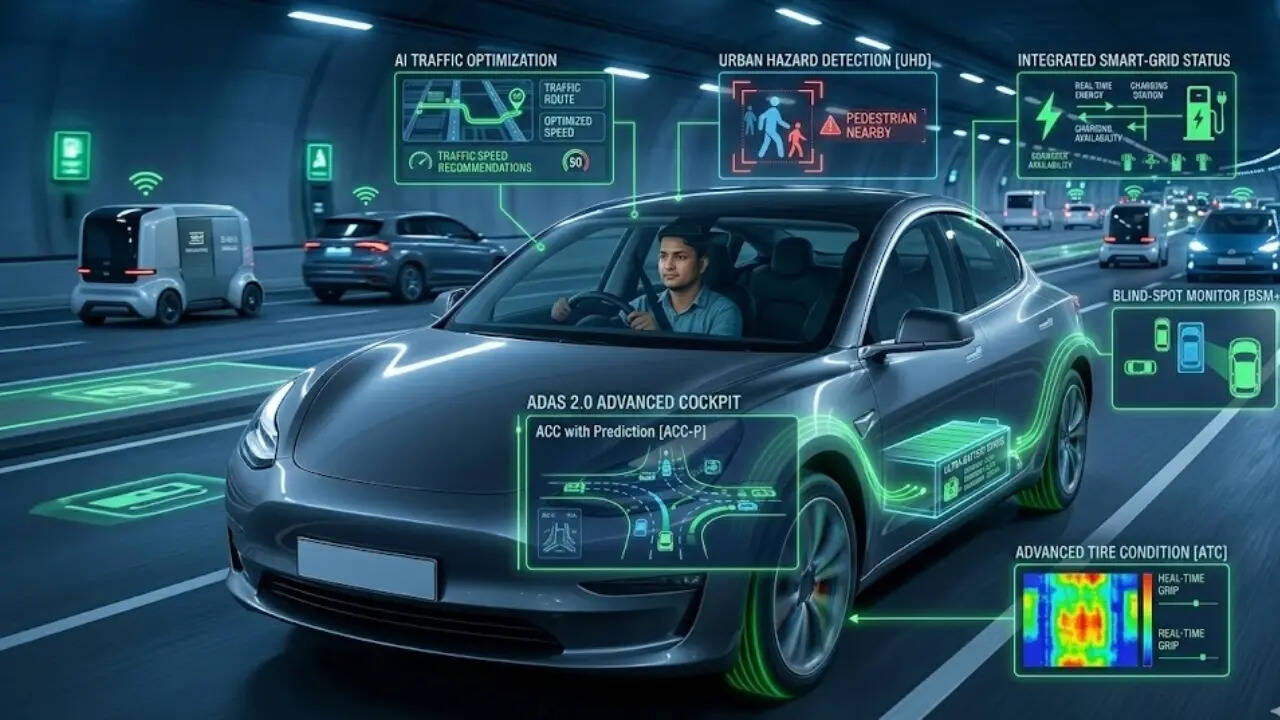
India's automotive sector is undergoing a technological transformation, including connected mobility, intelligent electronics, advanced safety systems, and electrification. The next phase of progress depends on how effectively these technologies address India’s unique mobility realities and become accessible across segments. Unlike many global markets, India faces complex conditions: dense urban congestion, mixed traffic patterns, unpredictable road behavior, and diverse infrastructure quality. Technologies designed for highway environments often need significant adaptation to suit Indian driving conditions. The future of mobility in India requires not only technological advancement but also responsible innovation that improves accessibility, safety, and usability. The urgency is significant, with over 1.77 lakh fatalities due to road accidents in 2024. Technologies such as advanced driver assistance systems (ADAS), smart sensing, connected mobility platforms, driver monitoring systems, and intelligent electronics are becoming increasingly important across vehicle categories. Their role is no longer limited to premium differentiation; they are steadily becoming critical tools for improving driver awareness, reducing road risk, and enhancing everyday mobility experiences. Consumers are becoming increasingly value-driven, demanding safety, connectivity, convenience, and digital experiences. This shift is accelerating the democratization of automotive technology across mass-market
India's Automotive Revolution: Why Local Innovation is Key to Mobility
India's automotive sector needs India-focused innovation to address unique challenges like congestion and diverse infrastructure, according to Amit Jain, CTO of Uno Minda.
3
visualizações
0
curtidas
0
comentários







0 Comentários
Entre para comentar
Use sua conta Google para participar da discussão.
Política de Privacidade
Carregando comentários...
Escolha seus interesses
Receba notificações personalizadas