
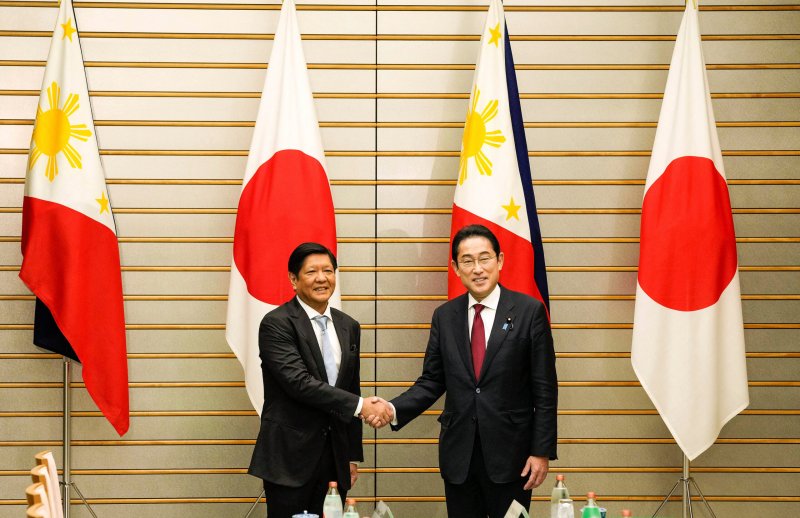
Philippine President Ferdinand Marcos Jr.'s visit to Japan is part of a broader effort to strengthen cooperation in security, defense, trade, and maritime affairs among regional powers. Japan and the Philippines have aligned their strategic interests, particularly regarding tensions in the South China Sea and the wider Indo-Pacific region. This reflects changing security calculations in Asia and tighter regional coordination among U.S. allies and partners. Japan and the Philippines share concerns linked to regional security and maritime stability, especially regarding China's growing military activity in disputed waters. Both countries view security cooperation as necessary for protecting sea lanes and territorial claims. The phrase 'anti-China contour' refers to the formation of strategic partnerships to limit China's growing influence. The South China Sea is strategically important, with several countries having overlapping territorial claims. Japan, though not a claimant, has major economic and strategic interests in the region. Since taking office, Marcos Jr. has deepened the Philippines’ security cooperation with the United States and its allies. The United States remains the central security actor in the Indo-Pacific region, encouraging joint military exercises and intelligence cooperation. Japan and the Philippines have expanded their defense relationship. Japan is increasing its military role in Asia due to shifting regional security dynamics. China views expanding military
Decoding Marcos Jr.'s Japan Trip: A New Era for Asia?
Philippine President Ferdinand Marcos Jr.'s visit to Japan signals stronger alliances in the Indo-Pacific. What's behind it?
5
visualizações
0
curtidas
0
comentários






0 Comentários
Entre para comentar
Use sua conta Google para participar da discussão.
Política de Privacidade
Carregando comentários...
Escolha seus interesses
Receba notificações personalizadas