
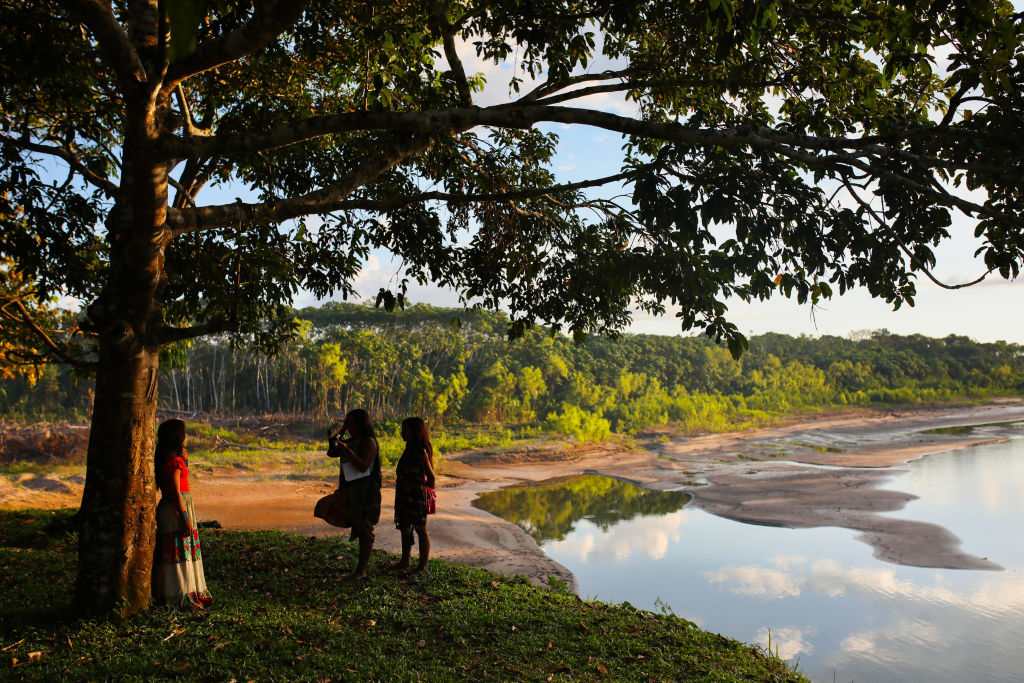
Artificial intelligence (AI) is providing Indigenous communities with new tools to protect their lands, from detecting illegal logging to monitoring wildfires. However, the data centers that power AI are creating new challenges, demanding resources like water, energy, and critical minerals often sourced from Indigenous territories. Indigenous leaders are now facing a complex dilemma: how to leverage AI's protective capabilities without exacerbating the very extractive forces they have long resisted. A study by Hindou Oumarou Ibrahim highlights both the potential and the risks of AI for environmental protection. AI can help monitor biodiversity, detect deforestation, and track climate impacts. Yet, it also raises concerns about land grabbing and resource exploitation. Ibrahim emphasizes the need for AI to be used in a culturally sensitive manner, ensuring Indigenous communities control its application to support their stewardship of the land. In Brazil, for example, Indigenous agroforestry agents are using AI to combat deforestation.
📝 Sobre este conteúdo
Esta matéria foi adaptada e reescrita pela equipe editorial do TudoAquiUSA
com base em reportagem publicada em
Truthout
. O texto foi modificado para melhor atender nosso público, mantendo a precisão
factual.
Veja o artigo original aqui.







0 Comentários
Entre para comentar
Use sua conta Google para participar da discussão.
Política de Privacidade
Carregando comentários...
Escolha seus interesses
Receba notificações personalizadas