
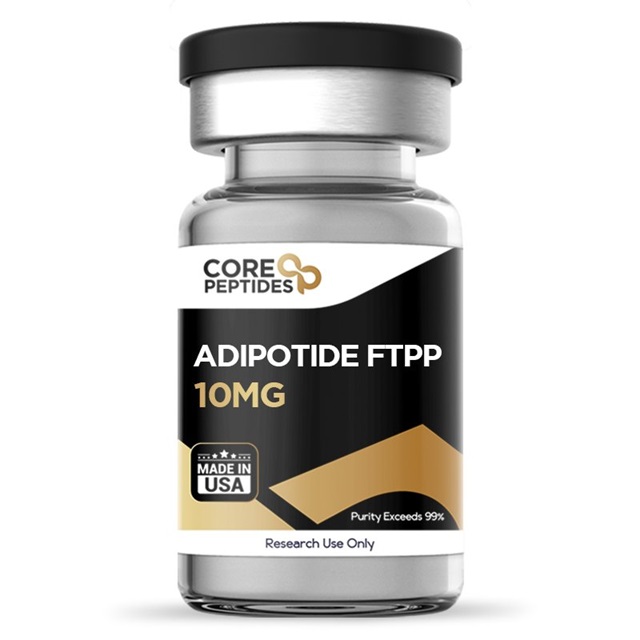
In the field of contemporary molecular and metabolic research, adipose tissue is increasingly viewed not just as an energy storage unit but as a dynamic, vascularized, and signaling-active interface. This shift has driven the search for molecular tools to selectively study adipose-associated pathways without disrupting systemic processes. Adipotide, and specifically its FTPP (Fat-Targeting Proapoptotic Peptide) configuration, has emerged as a key tool. It's designed to interact with specific markers on adipose tissue vasculature, offering a way to study tissue-specific vulnerabilities and metabolic regulation.
Adipotide FTPP is a modular peptide construct with a targeting motif to recognize features on adipose-associated endothelial surfaces and a functional domain to support intracellular stress pathways. The targeting segment is theorized to interact with prohibitin, a protein complex involved in mitochondrial regulation, which is unusually present on the surface of certain endothelial populations. The FTPP configuration is designed to exploit this, making it a research instrument for adipose-specific vascular interrogation.
Research suggests several ways Adipotide FTPP may work: selectively associating with adipose-associated vascular structures, modulating intracellular stress, and locally remodeling vasculature. These hypotheses are tested in controlled research models.
Adipotide FTPP's focus on vasculature-centric adipose regulation is a key implication. It allows researchers
Adipotide: The Peptide Revolutionizing Metabolic Research
Explore Adipotide, a peptide designed to target adipose tissue. Discover its potential in metabolic research, vascular regulation, and the fight against obesity.
7
visualizações
0
curtidas
0
comentários







0 Comentários
Entre para comentar
Use sua conta Google para participar da discussão.
Política de Privacidade
Carregando comentários...
Escolha seus interesses
Receba notificações personalizadas